
UCF’s offensive player grades from Pro Football Focus offered a clearer view of where the Knights held up and where they slipped in Saturday’s 26-13 home loss to Arizona State.
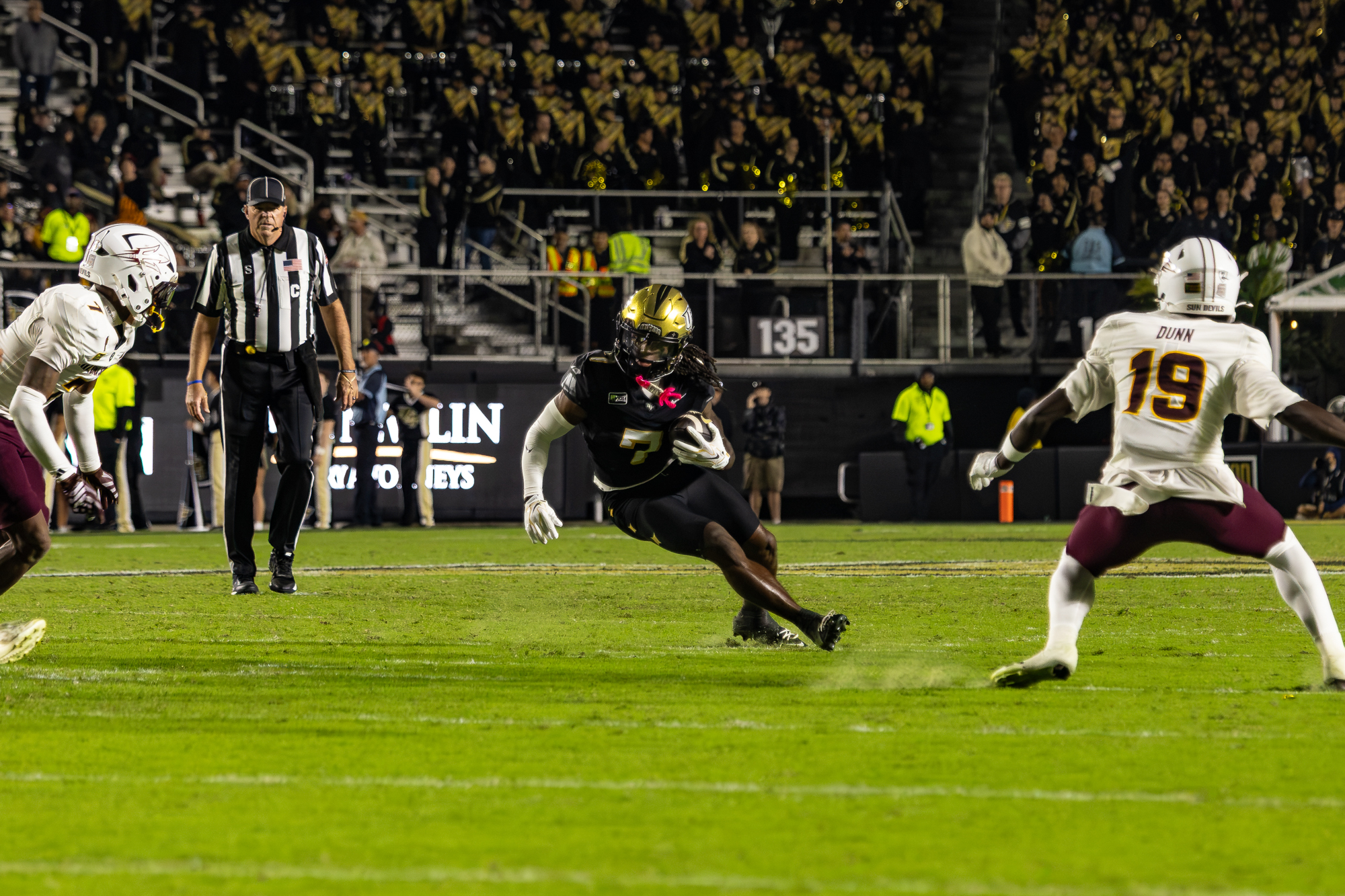
The defeat dropped UCF to 5-5 on the season after Arizona State controlled long stretches at Acrisure Bounce House. The Knights finished with 311 total yards, including 257 through the air, but managed only 54 rushing yards on 23 attempts and scored just one offensive touchdown before a late fourth-quarter strike made the final margin look closer.
Passing production, rushing problems
Quarterback Alonza Barnett III put up the biggest raw numbers for UCF’s offense, completing 21 of 31 passes for 257 yards with one touchdown and no interceptions. His late 40-yard touchdown pass to Tyren Hornes accounted for UCF’s final points of the night.
Wide receiver Josh Derry also stood out in the box score with 137 receiving yards, giving the Knights one of their few consistent sources of offense. Landen Chambers added 54 rushing yards and scored UCF’s first touchdown on a 2-yard run in the second quarter.
Even with those individual contributions, the larger offensive picture was uneven. UCF averaged just 2.3 yards per carry, lost 33 rushing yards on sacks and negative plays, and ran only 54 offensive snaps compared with Arizona State’s 79. That imbalance helped explain why any favorable PFF individual grades came within an offense that still struggled to sustain drives.
What the grades are measuring
PFF’s weekly college grades are built on play-by-play evaluation rather than just traditional stat lines, so the offensive rankings from this game are meant to reflect execution on each snap. Public access to PFF’s college page confirms the Arizona State-UCF game is included in its 2026 weekly grading database, though the full game-by-game breakdown requires a subscription.
That context matters for UCF after a game in which the passing attack showed some life but the run game and pass protection again became major issues. Arizona State recorded 165 rushing yards of its own, held the ball for long stretches and built a 16-7 halftime lead before pulling away in the fourth quarter.
Outside coverage of the game pointed to the same concern, with much of the postgame focus landing on UCF’s offensive line play and the offense’s inability to create balance. The official UCF recap also underscored the final result and the challenge the Knights now face in the final stretch of the regular season.
UCF’s next step is turning any solid individual grades into steadier production across the full offense as the Knights try to secure bowl eligibility in their final two games. Follow along through UCF’s official athletics channels for the next kickoff and updated team news.