
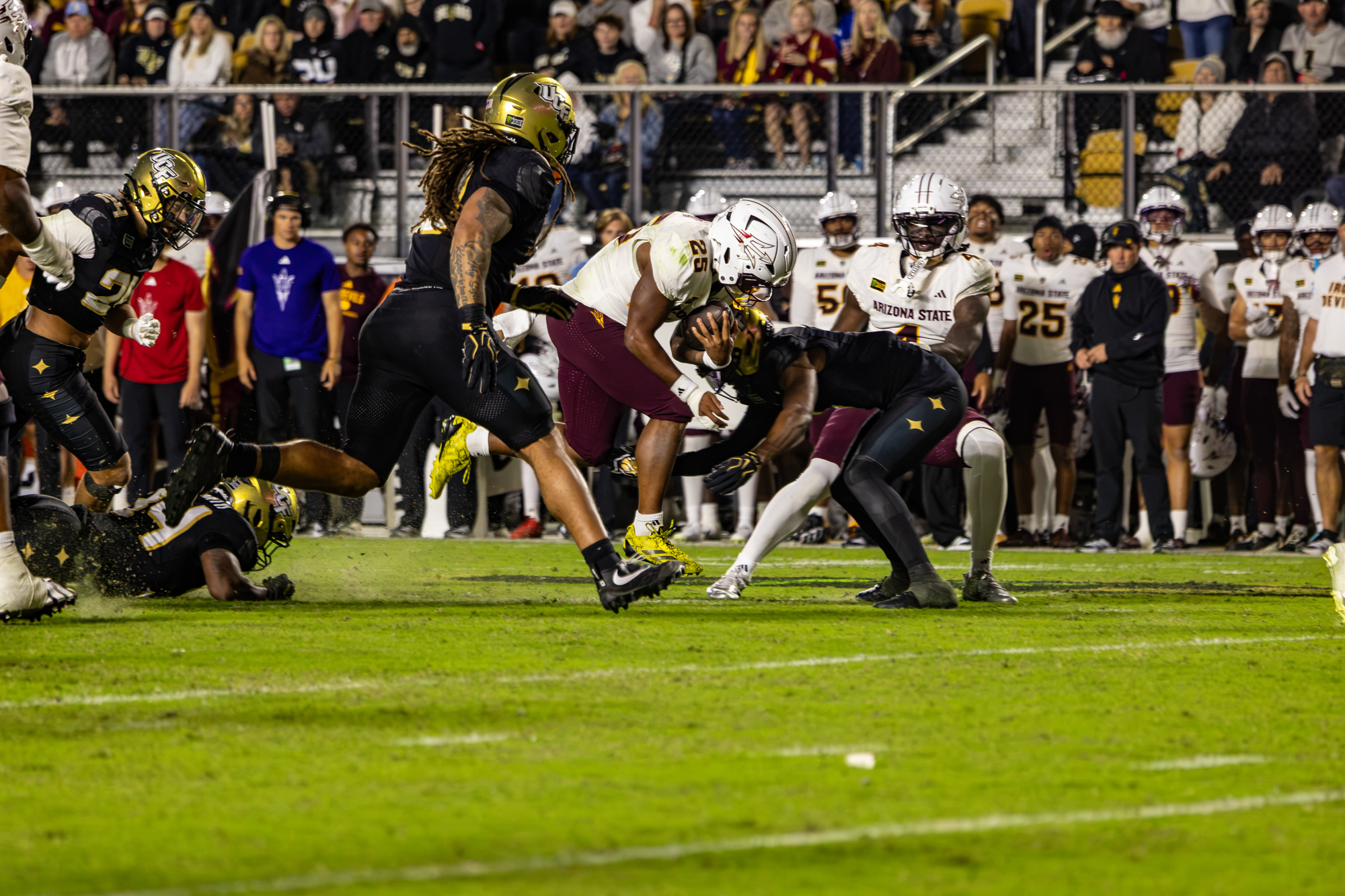
UCF’s defensive performance is under the microscope after Saturday’s 26-13 loss to Arizona State, with postgame grading analysis centering on which Knights held up best in a game where the unit showed flashes but spent too much time on the field.
The final score did not fall only on the defense. UCF opened with a stop and kept Arizona State out of the end zone on its first possession, continuing a season-long trend of strong opening-drive defense. But as the night went on, the workload mounted. Arizona State ran 79 plays, controlled the ball for 37:45 and converted 10 of 19 third downs, numbers that put steady pressure on the Knights.
Defense had moments, but the volume added up
That is the backdrop for any player-by-player defensive review from this game.
UCF allowed 389 total yards, including 165 on the ground, while Arizona State finished every red-zone trip with points and got four field goals from Carson Smith. The Sun Devils scored just two offensive touchdowns, which shows the Knights did not completely fold, but long drives and repeated third-down wins for Arizona State kept swinging the game.
The second quarter was especially costly. Arizona State scored 16 points in the period, turning a scoreless game into a 16-7 halftime lead. UCF still had chances after the break, but the defense was asked to answer too often as the offense struggled to stay on the field.
There were still individual efforts worth noting in any grading breakdown. UCF kept Arizona State from generating explosive scoring plays in bunches and forced the Sun Devils to work through extended possessions. Even the decisive fourth-quarter touchdown drive covered 14 plays and took more than seven minutes, a sign that the Knights made Arizona State earn yards the hard way even when the stop never came.
Why the grades matter now
The evaluation matters because UCF sits at 5-5 overall and 3-4 in Big 12 play with two regular-season games left. The Knights have shown this season they can be a sturdy run defense, and that reputation was part of the conversation entering this matchup. Against Arizona State, though, UCF could not get enough negative plays or key third-down stops to flip control of the game.
That leaves the spotlight on consistency. In a loss where the defense started well but gradually wore down, postgame grades help separate solid individual performances from the broader team result. For UCF, that is the key question coming out of this one: which defenders won their snaps often enough to build on, and where did the unit break down when the game turned?
UCF returns home again on Thursday, Nov. 20, when it hosts Iowa State at Acrisure Bounce House in the regular-season home finale.